IDK, modern Russia is a bag of dicks, but the USSR was a bag of dicks in capsaicin powder and a hint of ricin. The only notable differences are that modern Russia has less starvation and a lower percentage of incarcerated. And the worst part is they’re still closely associated with the same Tankies as before, they openly field military cooperations with the CCP and NK.
I mean, consider it from this perspective - if the USSR broke apart, but Russia remained in the hands of the Communists, what would it look like?
My thinking would be closer to Vietnam or China than North Korea. Starvation was not a major problem by the 1980s - inconvenience, inefficiency, and low civilian access to nearly everything else was the problem. Russia’s modern incarceration rate is actually higher, embarrassingly, than it was in the 1980s Soviet Union.
Certainly their foreign policy alliances haven’t changed much, but that’s neither a point for or against in comparison. And for all of its many, many faults, the USSR, at least, genuinely placed a higher value on engineers, scientists, academics, and artists than the modern Russian Federation does.
This is not to say that people in those careers were used well or morally, but rather than the Soviet Union, as a government, encouraged and lionized participation in those fields, and received likewise relatively enthusiastic participation and good returns from said fields from Soviet society.
The modern Russian Federation is a brutal and violent oligarchy, with mock elections, mass repression, and outright imperialism, just like the Soviet Union. Some lip service is given to freedom of speech, which is better than nothing, and thus better than it was under Soviet hardliners, but doubtfully better than glastnost. Modern Russia’s primary ‘saving grace’ to its population is that their consumer markets are open to more of the world than the old Soviet Union’s were, and that’s connected more with the global transformation of markets since the 1970s.
Getting people to pay attention to economic history in any country, though, is an exercise in futility, so instead it’s “Things were bad then, and they’re less bad for me now. It must be the people in charge.”

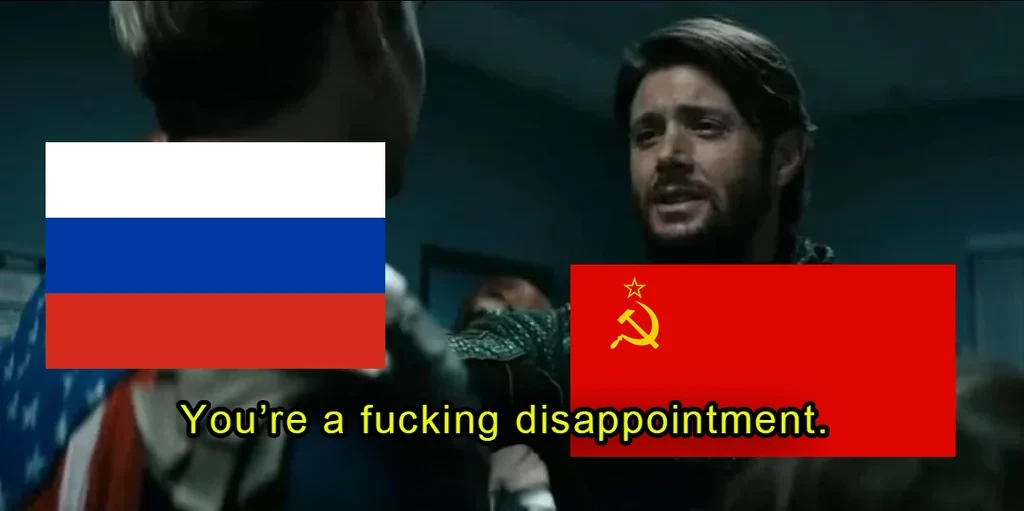
IDK, modern Russia is a bag of dicks, but the USSR was a bag of dicks in capsaicin powder and a hint of ricin. The only notable differences are that modern Russia has less starvation and a lower percentage of incarcerated. And the worst part is they’re still closely associated with the same Tankies as before, they openly field military cooperations with the CCP and NK.
I mean, consider it from this perspective - if the USSR broke apart, but Russia remained in the hands of the Communists, what would it look like?
My thinking would be closer to Vietnam or China than North Korea. Starvation was not a major problem by the 1980s - inconvenience, inefficiency, and low civilian access to nearly everything else was the problem. Russia’s modern incarceration rate is actually higher, embarrassingly, than it was in the 1980s Soviet Union.
Certainly their foreign policy alliances haven’t changed much, but that’s neither a point for or against in comparison. And for all of its many, many faults, the USSR, at least, genuinely placed a higher value on engineers, scientists, academics, and artists than the modern Russian Federation does.
This is not to say that people in those careers were used well or morally, but rather than the Soviet Union, as a government, encouraged and lionized participation in those fields, and received likewise relatively enthusiastic participation and good returns from said fields from Soviet society.
The modern Russian Federation is a brutal and violent oligarchy, with mock elections, mass repression, and outright imperialism, just like the Soviet Union. Some lip service is given to freedom of speech, which is better than nothing, and thus better than it was under Soviet hardliners, but doubtfully better than glastnost. Modern Russia’s primary ‘saving grace’ to its population is that their consumer markets are open to more of the world than the old Soviet Union’s were, and that’s connected more with the global transformation of markets since the 1970s.
Getting people to pay attention to economic history in any country, though, is an exercise in futility, so instead it’s “Things were bad then, and they’re less bad for me now. It must be the people in charge.”