

2·
11 days agoHoly shit nailed it lol
Holy shit nailed it lol

They are actively supporting the attacks by US and Israel.
The funny thing is that nobody even asked Ukraine for help, Zelenskyy just volunteered it. Very odd timing, as one would expect Ukraine to need all the resources it has, and more, at this moment.

The genocide people? You mean the IDF?

Oh come on!
(You had me in the first half ngl)
An excellent and very clear answer comrade, but don’t you have any book recommendations that are more on the commenter’s level? Roland Boer is great but it takes a pretty advanced level of political econ and history knowledge to grasp. Do you know of any simpler books on the subject? Or would you recommend just listening to Hasan Piker to someone at that stage of the journey?
Very good point. Parenti had something to say about that in “Power and the Powerless” pp. 10-12:
"Usually the least powerful party in an exchange relation is the one who stands in greatest need. The worker who is desperate to maintain his job, and who can easily be replaced by someone else, has a greater interest in the relationship than the employer who can readily replace him. The boss, having a lesser need for the worker than the latter has for his job, enjoys an advantage in the relationship. That is what has been described as ‘‘the principle of least interest,’’'? or, if taken from the perspective of the underdog, what I would describe as ‘‘the princi- ple of the greater need.”’ The choice for people in subordinate positions is more apt to be one of relative deprivations, that is, the lesser of two undesirable choices, than one of relative advantages. Indeed, one way we deter- mine that a person is in a subordinate or weaker position is by observ- ing that her choices vis-a-vis another are predominantly ones of rela- tive deprivation, for instance, compliance in an underpaid, exhausting job as opposed to unemployment. Implicit in such exchanges is the element of coercion, for if the subordinate party had her way, presumably she would choose neither of the deprivations. She submits to conditions not to her liking out of fear of having to face worse ones. Habit and custom are such, however, that we frequently do not recognize the element of coercion involved in most social relations. But once divested of the affirmative aura of legitimacy, these ex- changes reveal their asymmetrical and coercive quality. Consider one of the more blatant examples of social coercion, a relationship traditionally represented as one of glory and duty by those who do the coercing: specifically, that situation in which a ruling sovereign (whether king, dictator, or elected assembly) demands two or more years of a young man’s life in military service under penalty of law. Whether he chooses the army, jail, or exile, he is confronted with an exchange relationship not of his making; he is the weaker party faced with a coercive choice of relative deprivations. In such situations, assuming the absence of irrational ties to ultimate and purely affectual values of the kind Weber mentioned, the individual will comply only as long as he remains convinced that obedience has its returns, specifically the ‘‘reward’’ of being able to escape a still greater deprivation. The deprivations suffered by less fortunate persons in an asym- metrical exchange relationship are not immutable, that is, the ex- change could get better or worse. If the fortunes of the superior take an ill turn, the fortunes of the subordinate may suffer also. Hence, one can speak of a ‘‘forced collusive interest’’ between both parties, as between the slave and master, serf and lord, worker and owner. I say ‘*forced’’ because the subordinate party accepts the relationship at great cost to himself only because the alternative threatens an even greater cost: painful obedience instead of death, poor wages instead of starvation, and the like. To pursue the earlier example: suppose a young man decides to go into the army rather than suffer imprisonment or exile, or suppose he selects jail or exile as the preferred course, in what sense can it be said that he has chosen what is ‘‘best for his own interests’’? In fact, his own interests, as he might want to define them, would rule out all three choices and would demand a situation free of compulsory mili- tary service. His ‘‘real interest,’’ that is, his real or first preference, were he free to set his own agenda, might be to have nothing to do with conscription. But that alternative is, in the immediate situation, an ‘‘unrealistic’’ one, and he does not get the opportunity to consider his real preference. In facing the draft, he finds his interest range has been defined by others. The point is that power is used not only to pursue interest but is a crucial factor in defining interest or predefin- ing the field of choice within which one must then define one’s in- terests. You are free to ‘‘worship at the church of your choice,’’ or ‘‘vote for the party of your choice (Republican or Democratic).’’ The exercise of choice may be so narrow, so much a matter of relative deprivations, so tightly circumscribed by power conditions serving in- terests other than one’s own that the ‘‘choice’’ may be more a mani- festation of powerlessness than of power. A distinction should be made between one’s immediate interests within a narrow range of alternatives fixed by politico-economic and institutional forces (e.g., procuring a job with a firm that manufac- tures a highly profitable and ecologically damaging product) and one’s long-term interests (e.g., protecting the environment from dam- age by the manufactured product, working in a kind of productive system that rules out profits as the primary goal, etc.). A characteristic of our social system is its ability to oblige people to make choices that violate their broader long-term interests in order to satisfy their more immediate ones. To give no attention to how interests are prefigured by power, how social choice is predetermined by the politico-economic forces controlling society’s resources and institutions, is to begin in the middle of the story—or toward the end. When we treat interests as given and then focus only on the decision process in which these in- terests are played out, we fail to see how the decision process is limited to issue choices that themselves are products of the broader conditions of power. A study of these broader conditions is ruled out at the start if we treat each ‘‘interest’’ as self-generated rather than shaped in a context of social relationships, and if we treat each policy conflict as a ‘*new issue’ stirring in the body politic.
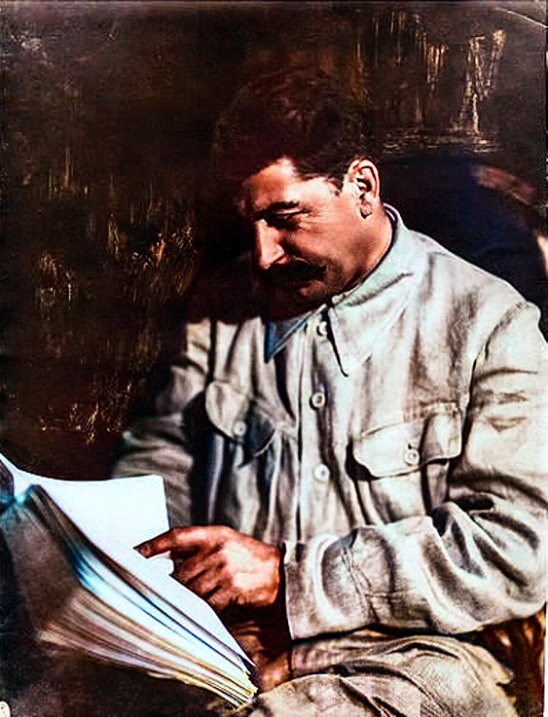
I would love to see reporting on Israel that uses the same language used with Palestinians.
The Likud controlled Health Ministry claimed 53 deaths but Iran reports it was a series of misfired Likud rockets that blew up the entirety of occupied Jaffa, an area pro-Likud factions call ‘Tel Aviv’.

The place is Palestine definitely, Gaza, but the date I don’t know… end of 2024 beginning of 2025?
It’s kind of quaint to expect a capitalist enterprise to give a fuck about their product, especially when someone else will do the suffering.
The US Constitution seemed to have this idea in mind with its intent, though it’s evolved into the same old concentration of power over time. Doesn’t matter which party either. The reality is power is so concentrated now that there are no true parties anymore. This is a mafia that transcends both sides.
So no China is no proof of anything except improper concentration of power. Mostly capitalist by the way.
If your opinion is that power is concentrated in the hands of the few in both the USA and China, how do you explain the difference between how bad it’s going for America rn vs. how good it’s going for China rn? Sure, both have their problems, no country is perfect, but it really looks like the USA is completely falling apart while China is having technological breakthrough after technological breakthrough.
Thanks for your response btw, the original commenter is right that people who downvote and leave don’t contribute anything to the conversation, unlike you.

From 2022?
I really don’t know (it’s probably fake and/or an experiment on the users) but it does change periodically while scrolling.
I don’t get it either but I bet Robert Cainer voted for Brexit.
Wow, thanks for this comment. I had no idea.

White Empire: <Commits appalling violence and repression against the Iranian people>
KKKeir SStarmer: “Iran can end this now. They should refrain from further strikes, give up their weapons programs, and cease the appalling violence and repression against the Iranian people”

Wait do you mean in 1970 or was there also one in 1973 that I’m not finding?
These days Israel can just randomly bomb a school and kill dozens of girls her age to start a war!

Chris Gilbert gives me such weird vibes. I don’t think he’s disingenuous, and I can easily verify any verifiable claims he makes, but he’s just so in love with Venezuela, Chavismo, and the Bolivarian Revolution in general that I think that makes him… maybe not unreliable but more like that you won’t get the full picture from him. He’s just like too enthusiastic about the subject matter to look at it impartially.
I haven’t read the book but thanks to this good post and the links I will.
You can see more of Chris Gilbert on The Empire Files.
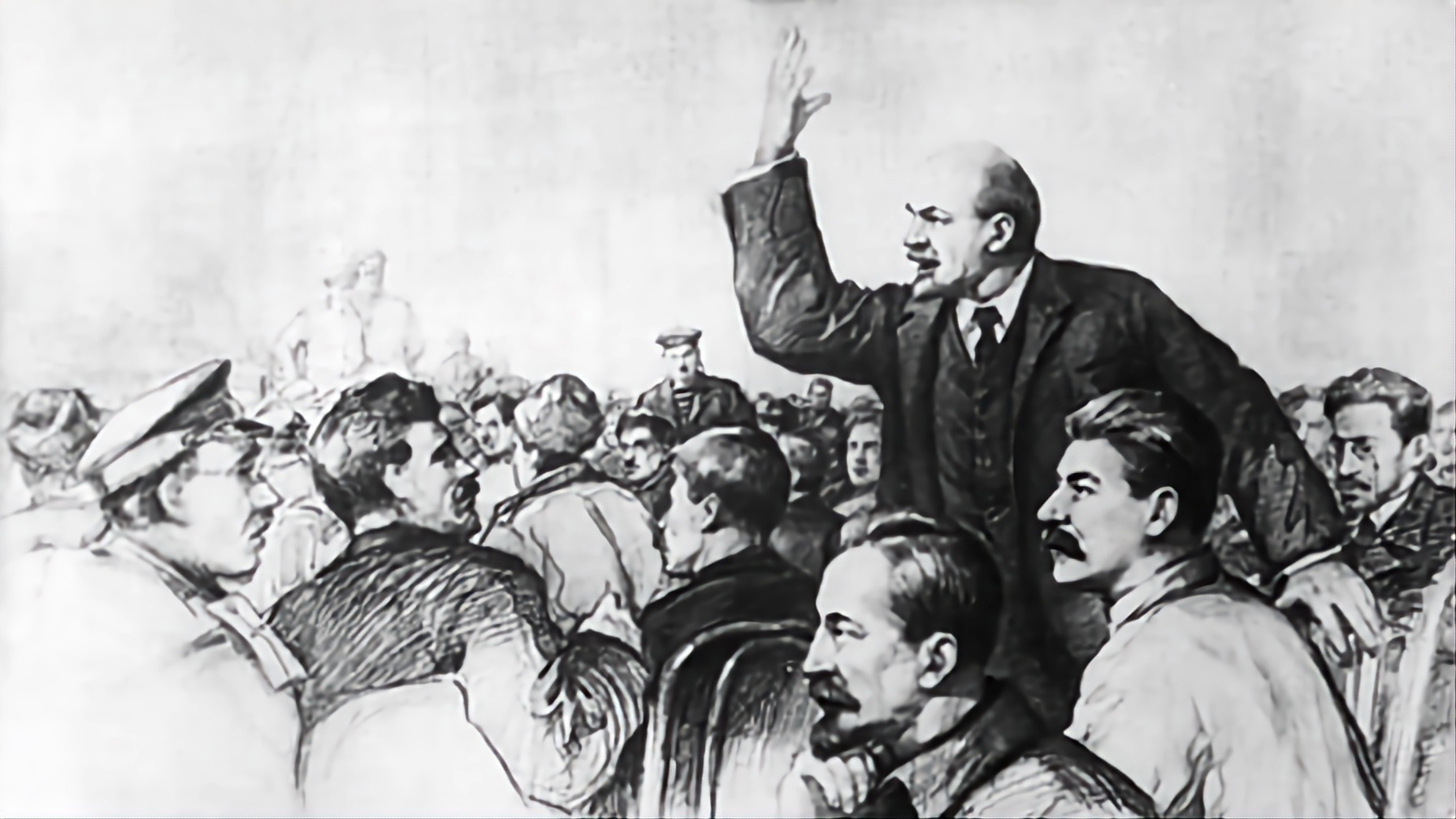
those discussions will determine “whether American soldiers go to hell or return to America.”





Not specifically communism but mine is The Tragedy of the Commons where they explain that in a free market (completely deregulated), profit maximizing situation among competitive, non-communicating economic actors the environment is destroyed and there is complete resource depletion. Not only is it just neoliberal capitalism but the economic actors are all from the guy’s imagination and don’t behave like any group of humans ever, anywhere, in recorded history. This is somehow a vErY iMPorTaNt EXamPLe of why capitalism is the best system for social organization and managing scarce resources And it has persisted for like 50 years or something, which is incredible considering the argument falls apart at the first investigation.
My second favorite is the picture of empty grocery shelves in Amerikkka during COVID 2020 that says “this is life under socialism”. For some reason there were no pictures of Goldman and AIG guys in 2009 with that caption but that’s a different story.