
Welcome to the second week of the Imperialism Reading Group! Last week’s thread is here.
This is a weekly thread in which we read through books on and related to imperialism and geopolitics. How many chapters or pages we will cover per week will vary based on the density and difficulty of the book, but I’m generally aiming at 30 to 40 pages per week, which should take you about an hour or two.
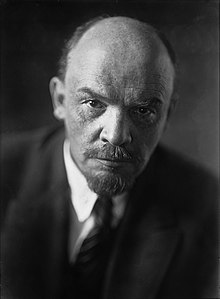
The first book we are covering is the foundation, the one and only, Lenin’s Imperialism: The Highest Stage of Capitalism. We will read two chapters per week, meaning that we will finish reading in mid-to-late February. Unless a better suggestion is made, we will then cover Michael Hudson’s Super Imperialism, and continue with various books from there.
Every week, I will write a summary of the chapter(s) read, for those who have already read the book and don’t wish to reread, can’t follow along for various reasons, or for those joining later who want to dive right in to the next book without needing to pick this one up too.
This week, we will be reading Chapter 3: Finance Capital and the Financial Oligarchy, and Chapter 4: Export of Capital.
Please comment or message me directly if you wish to be pinged for this group.
I’ll add more later bc only quick work break:
Couldn’t help but thinking
the entire first two chapters. “Compulsory submission to monopolist combines” That was written over 100 years ago and Capital et al have just been playing the hits on repeat since then.
The simultaneous existence of 1) like, ten corporations that own basically everything, and 2) bourgeois economists and politicians still doing the “we love our small businesses, don’t we folks, we gotta help 'em out” thing, really shows just how right Lenin is
And how anti-trust law is just saving the capitalists from themselves. A very real example of how bourgeois states act to enforce capitalist hegemony even if on the surface, they appear to be acting against them (with minimum wage laws and safety laws and so on), and thus are tools of capitalist rule, rather than limiters on the capitalists. One of those things that libertarians are unwilling to believe or understand. Without all these “pro-worker” laws (and that’s not to say that state-mandated breaks are Bad, Actually or anything) this whole system would have imploded like 50 years ago.
This isn’t a smarty pants theoretical point, but your comment about the worshipping of small business owners remind me of an early, somewhat, darkly humorous, memory in my radicalization. On the TV news there was some report about a pretty bad flood in Pennsylvania (or some state), and while they were showing a rescue boat in the waters carrying away what survivors they could find, the TV anchor had to chime in to remind us to “think about all those small businesses, oh gosh main street is just under water, it’s gonna take some time to rebuild those businesses!” I don’t remember them mentioning anything about the people being saved. Just harping about the flooded ma and pop shops while rescue workers were trying to look for real people to save.
Anyway, once I saw it back then I just never stopped noticing it. Nothing new, it was just memorable the first time my baby leftist brain noticed it.
Can I still ask questions about ch. 2 in this thread?
spoilering in case no
When he quotes Marx on “the form of a general distribution of the means of production”, what exactly does form mean here? He talks about the content right after it, but I can’t figure out exactly what this distinction is referring to in this context.
He correlates it with another dichotomy, general and private (the latter might be different in English, I’m reading in another language)
My version has that quote as “[The banking system] presents indeed the form of common bookkeeping and distribution of the means of production on a social scale, but only the form”.
From what I could understand it is about how that information could be used in a socialized (“general”) economy for the benefit of all, but in practice conforms to the whims of Big Capital (the “private”).
Makes sense, thank you 😸
On this note, is there a specific source to study this kind of jargon Marx and Lenin use regarding phenomena, like form/appearance or general/private? Is it all from Hegel?
I wish I had a more succinct response, and something more definite to share, but I’ve found that Red Sails has a lot of articles about Hegel, Lenin’s and Marx’s interpretations of Hegel, as well as articles on dialectics as well. You can do a search for any of the above and find some good hits.
I haven’t given all of them a read, so I can’t back them up, but the following articles are ones that I have on my reading list and I thought I’d share. Perhaps if others are already familiar they can chime in to support or reject the below articles:
Critique of Hegel’s Dialectic and General Philosophy
On Lenin’s Philosophical Notebooks
Some are long reads though, so I’m also still on the lookout for any shorter overview of the ideas, or even an encyclopedia of the basic terms would be nice. So far it just feels like one reads a lot of the above and overtime the conception gets less and less vague. My understanding is still in this vague territory, I feel like I can sorta get what is meant by the terms, but couldn’t define them well (so not much of an understanding I guess).
On the topic of dialectics (apart from Hegel specifically), I found this article, Dialectics - Maoist and Daoist to be the articled where dialectics started to ‘click’ for me. It compares and contrasts dialectics as understood and applied by Mao to Taoism. This article also discusses Lenin’s ideas on dialectics as well.