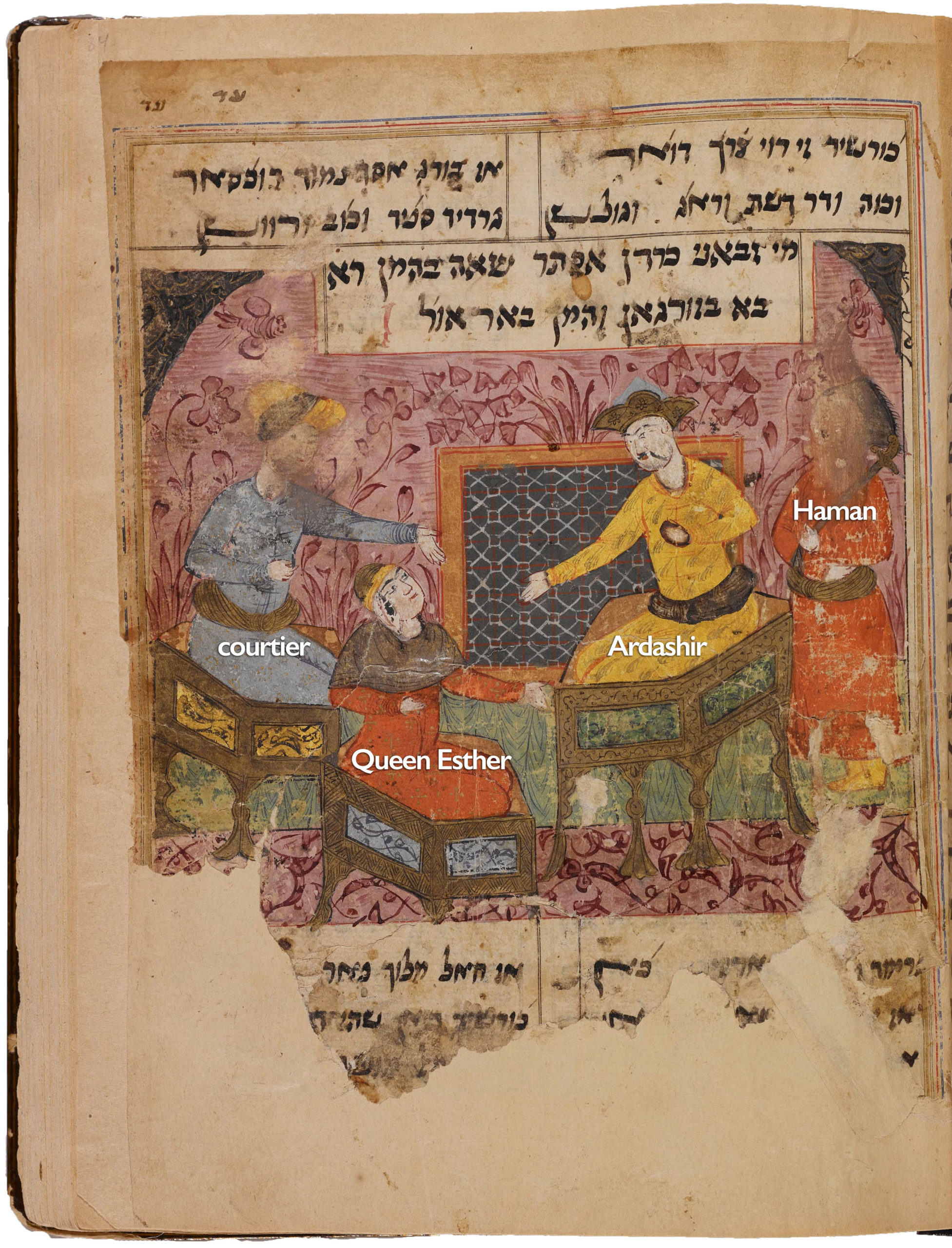
This painting, however, does not depict the story of the Book of Esther. Rather, it comes from a popular book written in 1333 called the Ardashirnama (the Book of Ardashir—an Iranian King), which recounts and embellishes the story of the Book of Esther to emphasize its Jewish owners’ identities as both Iranian and Jewish.
The Ardashirnama was written for the Jewish community living in Iran during the time of the Safavid Empire, and the text is not written in Hebrew, but in Judeo-Persian (Persian written in Hebrew characters). This essay explores how the late 17th- and early 18th-century Jewish community celebrated their Jewish–Iranian identity through art and poetry in one illuminated manuscript of the Ardashirnama.
[…]
The Ardashirnama that is the focus of this essay is one of only two illuminated Ardashirnama manuscripts that survive, and it is currently in the collection of the Jewish Theological Seminary (JTS). [1] While the scribes (who copied the texts) were Jewish, the identity of the artists who painted the illuminations are entirely unknown. It is possible that they were painted by Jewish artists; but it is more likely that they were created by Muslim artists who adapted familiar Safavid styles to suit commissions from Jewish patrons.
[…]
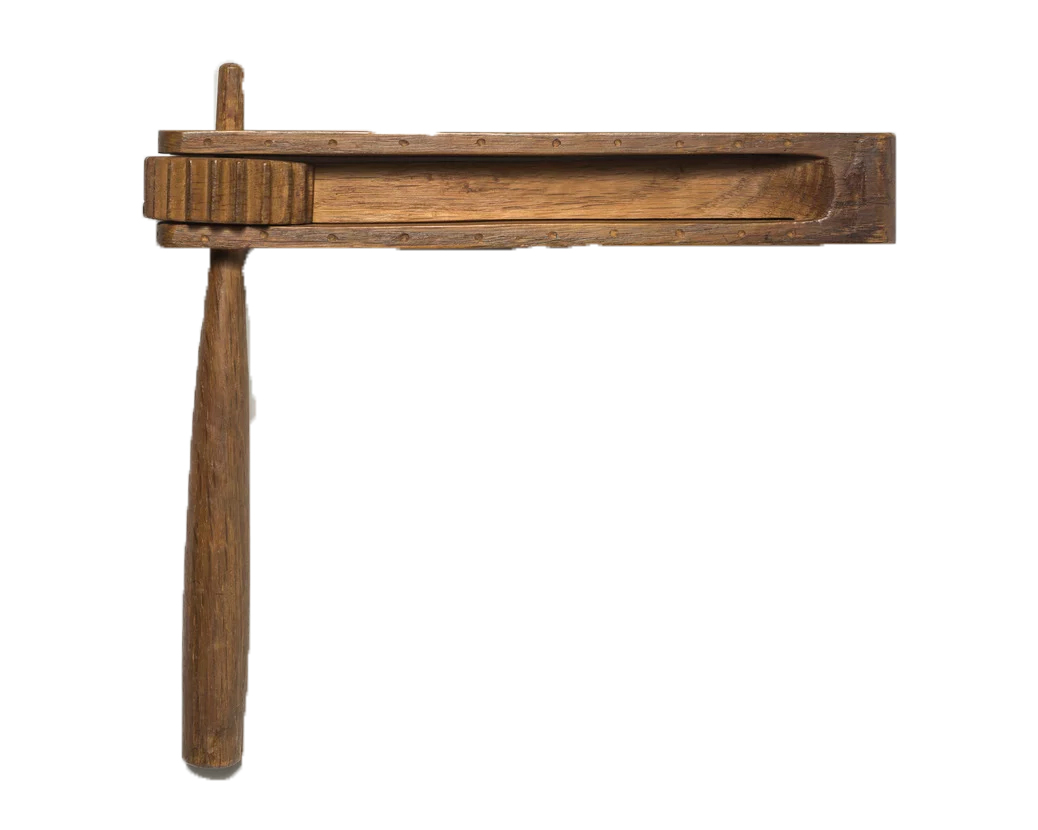
One image from the manuscript depicts the hanging of Haman, the King’s minister, who plotted to murder the Jews. As in the painting at the opening of the essay, his face is entirely rubbed out. The erasure of the figure by the book’s owners follows the traditional custom to use groggers, or noisemakers, when Haman’s name is mentioned during the annual recitation of the Book of Esther on the holiday of Purim. [2] With each swing of the Purim noisemakers, the name of Haman is blotted out.
As tensions eased, in the ensuing decades, the Ardashirnama and other Judeo-Persian manuscripts continued to be copied and produced within the Jewish communities of Iran. Through the story and paintings of Esther and Ardashir, the Ardashirnama redefined Jewish identity as inseparable from that of the Iranian people. The survival of this rare illuminated manuscript gives visible expression to the Jewish community’s deeply felt Iranian identity, as they adapted Safavid painting to recast Jewish history as intrinsically Iranian history.
(Source.)